Why the Red Sea Is One of the World’s Top Diving Destinations
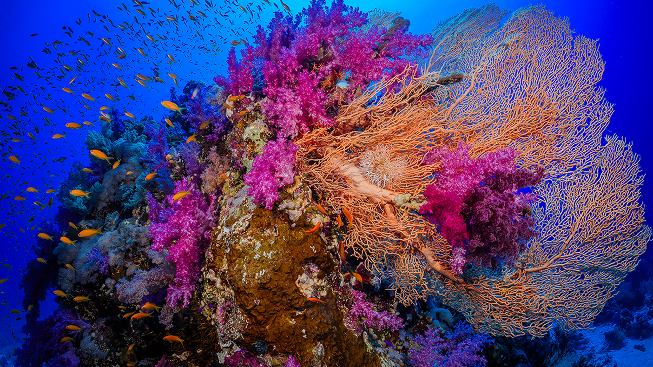
The first thing you’ll notice when you enter the water is its clarity. Surrounded by arid sand deserts with no major rivers to carry in silt deposits, the Red Sea offers exceptional visibility often exceeding 30 to 40 meters.
Exceptional Underwater Visibility & Coral Reefs
The striking contrast between the golden desert landscape above the surface and the deep blue hues of the hard corals underwater creates a truly unforgettable visual experience.
Water Temperature & Diving Conditions
Water temperatures vary significantly by season, ranging from 21°C–23°C in winter (December–March) to 28°C–29°C during peak summer (July–September).
What Makes Red Sea Diving Unique?
Preparing for these conditions is key to a comfortable trip, requiring a 5mm wetsuit for winter or repetitive liveaboard dives, whereas a 3mm wetsuit suffices in summer.
Red Sea Liveaboard vs Day-Trip Diving: Which Is Right for You?
| Diving route | Main attractions | Best suited for |
| Northern Red Sea | SS Thistlegorm, Abu Nuhas wrecks, coral reefs | Wreck enthusiasts and reef divers |
| Brothers Islands, Daedalus and Elphinstone (BDE) | Offshore reefs, pelagic encounters, sharks | Experienced divers seeking offshore adventures |
| Deep South Red Sea | Remote reefs, coral gardens and marine life | Divers seeking varied reef environments |
Exploring the Red Sea’s Historic Shipwrecks
The Red Sea is an underwater history museum. This ancient and strategic shipping route holds many historical artifacts that have now transformed into artificial coral reefs.
SS Thistlegorm – A World War II Wreck
Inside, you can still see military trucks, BSA motorcycles, ammunition, and even a steam locomotive, all neatly arranged at depths of 16–30 meters.
Abu Nuhas – The Red Sea’s Famous Shipwreck Graveyard
A coral reef that serves as a “graveyard” for many ships, including the Giannis D, the Carnatic, and the Chrisoula K.
Marine Life in the Red Sea: Sharks, Dolphins and Turtles
Hammerhead and Oceanic Whitetip Sharks
At Daedalus and Elphinstone, you’ll have the chance to encounter curious oceanic whitetip sharks (Carcharhinus longimanus), as well as schools of hammerhead sharks at depth.
Spinner Dolphins Around Sataya and Sha’ab Samadai
offer the chance to swim with pods of spinner dolphins in their natural habitat.
Green Sea Turtles and Dugongs Around Marsa Alam
are famous for their seagrass beds, which are home to giant green sea turtles and dugongs.
Diving Requirements and Preparation for a Red Sea Liveaboard
Certification and Logged Dives
A minimum of PADI Advanced Open Water Diver (or equivalent) is highly recommended. Many liveaboard sites require a minimum of 30 to 50 logged dives.
Currents, Buoyancy and Surface Marker Buoys
Dive sites such as Ras Mohammed or the Brothers Islands feature strong currents and steep reef walls (dramatic drop-offs). Mastery of buoyancy control and the use of a Surface Marker Buoy (SMB) are essential skills for safety.
Nitrox, Wetsuits and Essential Equipment
An Enriched Air Nitrox certification is very useful for extending your no-decompression limit, especially when doing multiple daily dives on a liveaboard.
Best Time to Dive the Red Sea
| Period | Main appeal | What to consider |
| March – May | Comfortable conditions and varied marine life | Conditions can vary by location |
| June – August | Warmer water and opportunities for hammerhead encounters | Hot weather and offshore conditions |
| September – November | Warm water and potential oceanic whitetip encounters | Sightings are never guaranteed |
| December – February | Cooler water and northern wreck itineraries | Bring suitable thermal protection |
Underwater Photography Tips for Red Sea Diving
Capturing Coral Reefs and Wide-Angle Scenes
Take advantage of 30–40-meter visibility to capture spectacular wide-angle photos of coral landscapes against the Red Sea’s signature blue backdrop.
Photographing Historic Shipwrecks and Marine Life
Tips for adjusting lighting for subjects at depth (such as the SS Thistlegorm shipwreck) to ensure the natural red and yellow colors of the hard corals remain optimally vivid.

Plan Your Red Sea Adventure with DUNE
Don’t just dream about it experience Egypt’s iconic reefs and wrecks with DUNE Liveaboard. Check out our Egypt Liveaboard Diving schedules and pick your perfect route now!