If you are planning a dive-focused trip to the Maldives and want more than just a few guided reef dives, this guide is for you. Many divers we speak to are deciding between staying at a resort or joining a Maldives liveaboard, and the difference in experience is bigger than most expect.
Right now, divers are looking for trips that maximise water time, access remote sites, and make the logistics effortless. A liveaboard answers those needs in a way land-based diving rarely can, especially for those who see diving as the main purpose of the journey, not just an add-on activity.
When a Maldives Liveaboard Makes the Most Sense
- A Maldives liveaboard gives you access to remote atolls and less-dived reefs.
- You can complete up to 3–4 dives per day without daily transfers from a resort.
- It is often more cost-effective per dive for travellers planning a dive-heavy itinerary.
- It suits confident, enthusiastic divers who want pelagic encounters and varied sites.
- The onboard community and expert guides shape a deeper, more immersive dive trip.
Why Divers Are Reconsidering Resort-Based Diving
Over the past few years, we have seen a clear shift in how divers plan Maldives trips. Instead of building a holiday around a hotel and adding a few dives, more travellers are designing their entire schedule around dive quality, site variety, and marine life encounters.
Resort diving is usually limited to sites within a short boat ride. That can mean repeating similar reefs and planning around fixed schedules. A Maldives liveaboard changes the equation. Because we travel between atolls, we can plan each day around conditions, currents, and recent marine life sightings. For divers who value variety and opportunity, mobility matters.
Access to Remote and Diverse Dive Sites
One of the biggest advantages of our Maldives liveaboard itineraries compared to resort diving is range. Here is What Dune Liveaboard will cover:
Beyond the house reef
Dive centres at most resorts operate within a half-hour to one hour drive from the resort. That’s usually one of the diving limits when they do liveaboard safaris. With us, you get to experience several atolls and multiple dive sites that day boats can’t reach.
Unspoiled locations with fewer divers
Some of the reefs we visit are undisturbed and see far fewer bubbles than your average liveaboard. Healthier coral, wilder marine life, and a stronger sense of exploration are often the result of less diving. For underwater photographers and experienced divers, this can elevate the quality of every dive.
Dynamic routing based on real conditions
A major advantage of living and traveling on the boat is that our captains can adjust the route based on the current conditions real time – the weather, currents, and visibility are all variables. If conditions are better in another channel or atoll, we go there. That’s the advantage of a Maldives liveaboard over a resort stay.
The “Dive, Eat, Sleep, Repeat” Lifestyle
A liveaboard is built entirely around diving, and that focus shapes the natural rhythm of each day on board. Instead of fitting dives around transfers, schedules, or resort routines, your time is organised so you can make the most of the conditions and your energy levels.
Maximum time in the water
We typically schedule 3 to 4 dives per day, including night dives when the weather and currents allow. Over the course of a week, that can mean 20 or more dives across a wide range of sites. For many of our guests who have travelled far to reach the Maldives, this kind of dive frequency makes the journey feel truly worthwhile and immersive rather than rushed.
No daily logistics
Your cabin is only a few steps from the dive deck, which changes the experience more than people expect. There is no loading gear into vehicles, no long waits at jetties, and no carrying wet bags back through a hotel lobby. After each dive, you rinse your gear, hang it in its place, and then focus on resting, eating, or chatting through the dive while we prepare for the next one.
Effortless surface intervals
Surface intervals stop feeling like gaps to fill and become part of the enjoyment. You might stretch out on the sun deck, review photos with other divers, or simply enjoy a proper meal while we cruise toward the next site. The boat quietly moves you to the next location, and you arrive rested and ready, without ever having to think about the logistics behind it.
Unrivalled Pelagic Encounters
Most divers in the Maldives focus on the bigger animals and the more challenging channel dives. A Maldives liveaboard is built to make the most of those possibilities.
Following the big fish
We have to plan itineraries to include the big fish and remote animals, specifically the mantas and whale sharks, at Hanifaru Bay and the South Ari Atoll. Since we go to capture all of the big fish at Hanifaru Bay during the night, we will be the first in the water at sunrise, preceding the dive boats.
Channel diving for action
A large number of our dives concentrate on channels of water that break through the reef. We focus on the sites that are current and tide dependent and so attract the sharks, eagle rays, and large schools of tuna and big fish. Since they are not always near the dive resorts, those are usually the dives that the divers remember most.
Cost-Effectiveness for Dive-Focused Travellers
At first glance, a liveaboard can look like a premium option. However, we can break it down with guests, and the value becomes clearer.
All-inclusive structure
At Maldives, most liveaboards include all dive packages, which means that there is a large number of dives included in the prices, along with meals and accommodation on the boat. This results in less add-ons and makes budgeting more straightforward.
Lower cost per dive
When you compare a resort’s nightly room rate plus individual dive fees, the per-dive cost on a liveaboard is often significantly lower for those planning to dive almost every day. For serious divers, this makes a big difference over a week.
The Social Side of a Liveaboard Trip
A liveaboard is not only about diving more; it is also about sharing the experience.
A community of like-minded divers
Meals are usually communal, and conversations often revolve around the day’s dives, marine life sightings, and photography tips. Many guests arrive as strangers and leave as dive buddies planning their next trip together.
Experienced regional guides
Because we operate across multiple atolls year-round, our dive teams build wide regional knowledge rather than focusing on a single house reef. That helps with reading currents, choosing entry points, and increasing the chances of memorable encounters.
The Dhoni Advantage: Comfort Without Compromise
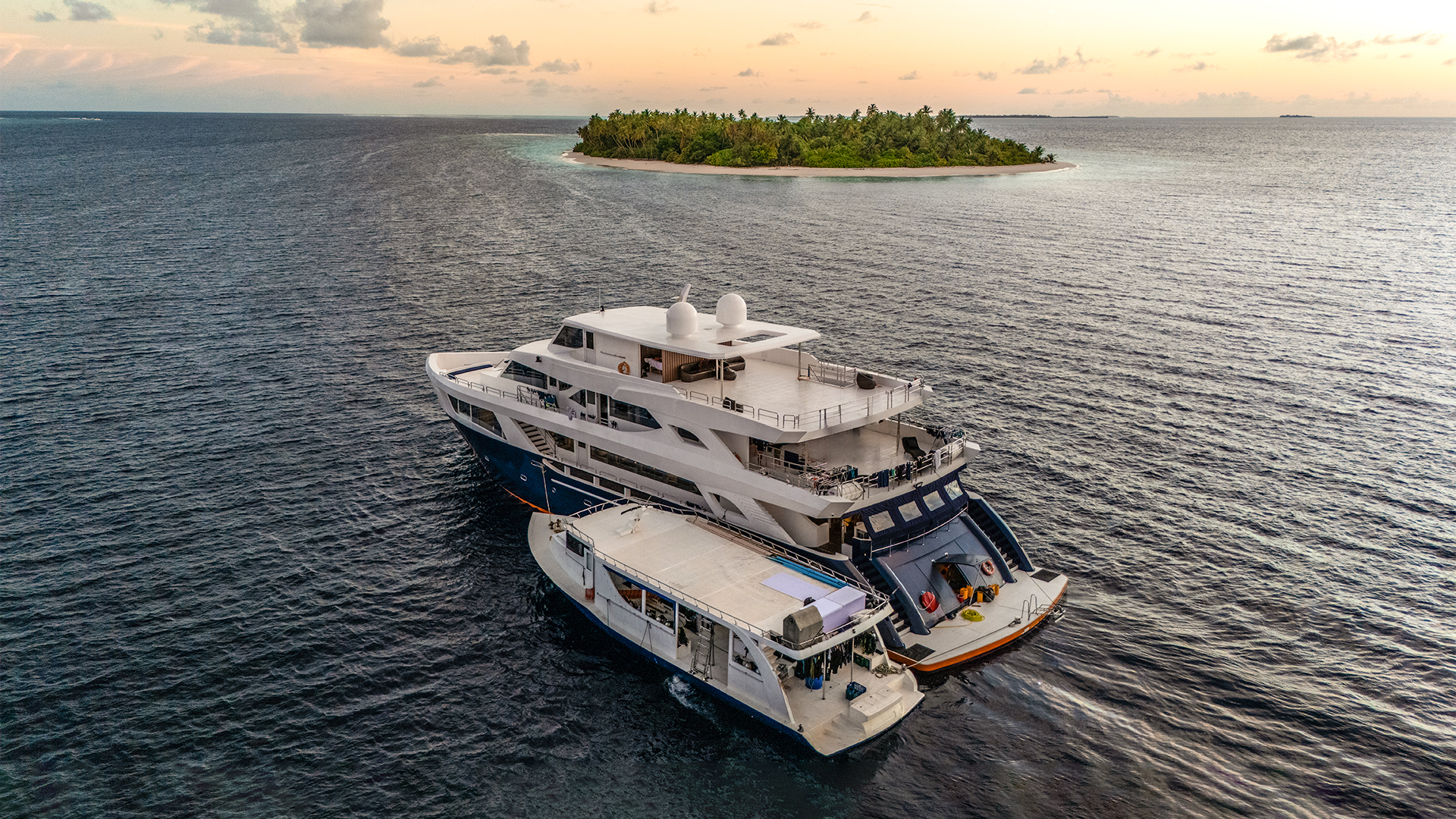
In the Maldives, we dive from a separate support boat known as a dhoni.
This keeps compressors, wet gear, and noise off the main vessel. While the dhoni handles tanks and equipment, our main boat remains a quieter, more relaxed space. It is a small operational detail that makes a noticeable difference in onboard comfort.
How We Shape the Maldives Liveaboard Experience
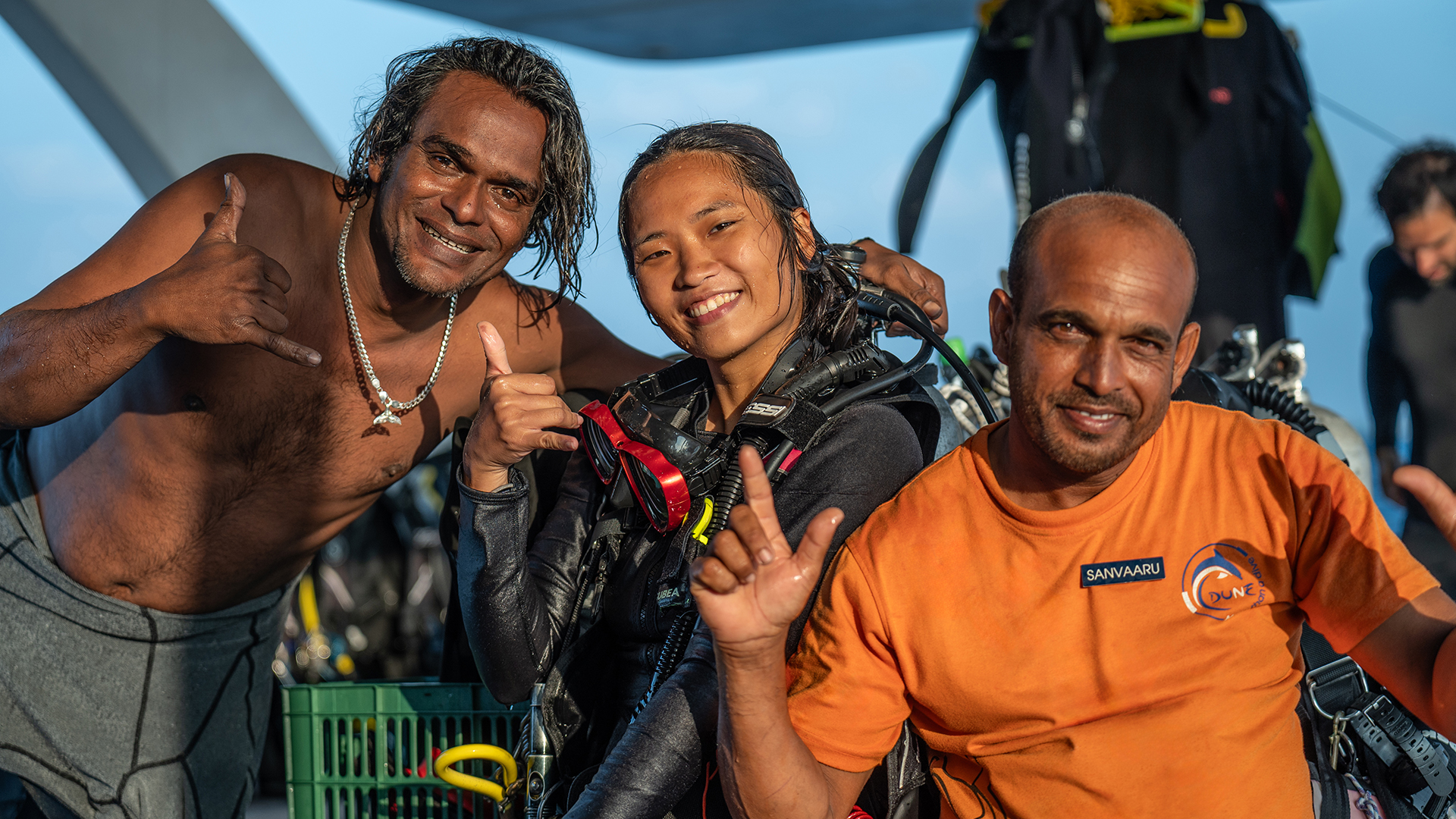
Over time, we have learned that no two dive groups are the same. Some guests are focused on pelagics and strong currents, while others prefer a balance of channels, thilas, and relaxed reef dives.
When planning our Maldives liveaboard journeys, we pay close attention to diver experience levels, seasonal conditions, and recent marine life patterns. In similar trips, divers often underestimate how much currents, timing, and site order affect the overall experience. Our role is to align the itinerary with what guests most want to see, while keeping safety and comfort at the centre.
Things Divers Often Ask Before Booking
How much will the dive plans change during the trip?
We change dive sites depending on the weather, current, and visibility. We have a general route, but each day is a new set of conditions, and diver safety is the top priority.
Is this suitable for some people that have not done many dives in high currents?
Some of the dives in the channels of the Maldives can be tough. Guests are generally expected to be able to perform a drift dive and have good buoyancy control, but we help assess this prior to the trip.
Is it possible to have different experience levels on the same boat?
Most of the time, yes. We do dive briefings, team up buddies, and select sites to balance the group, but we tend to have advanced itineraries that are for the more experienced divers.
Ready to Plan Your Maldives Liveaboard?
Picking a Maldives liveaboard is deciding on what type of dive trip you want. If you want variety, pelagic encounters, and a dive-centric schedule not bound to the hotel, this type of trip is generally the most cost-effective option.If you are already imagining your week at sea with Dune Liveaboard, the next steps are simple and exciting. Start by choosing the destination that draws you in most, then select the dates that fit your travel plans. From there, pick the cabin that suits your comfort preferences and begin packing your dive essentials. Once those decisions are made, we take care of the rest — from dive planning to onboard logistics — so you can arrive relaxed, prepared, and fully focused on the underwater experiences ahead.