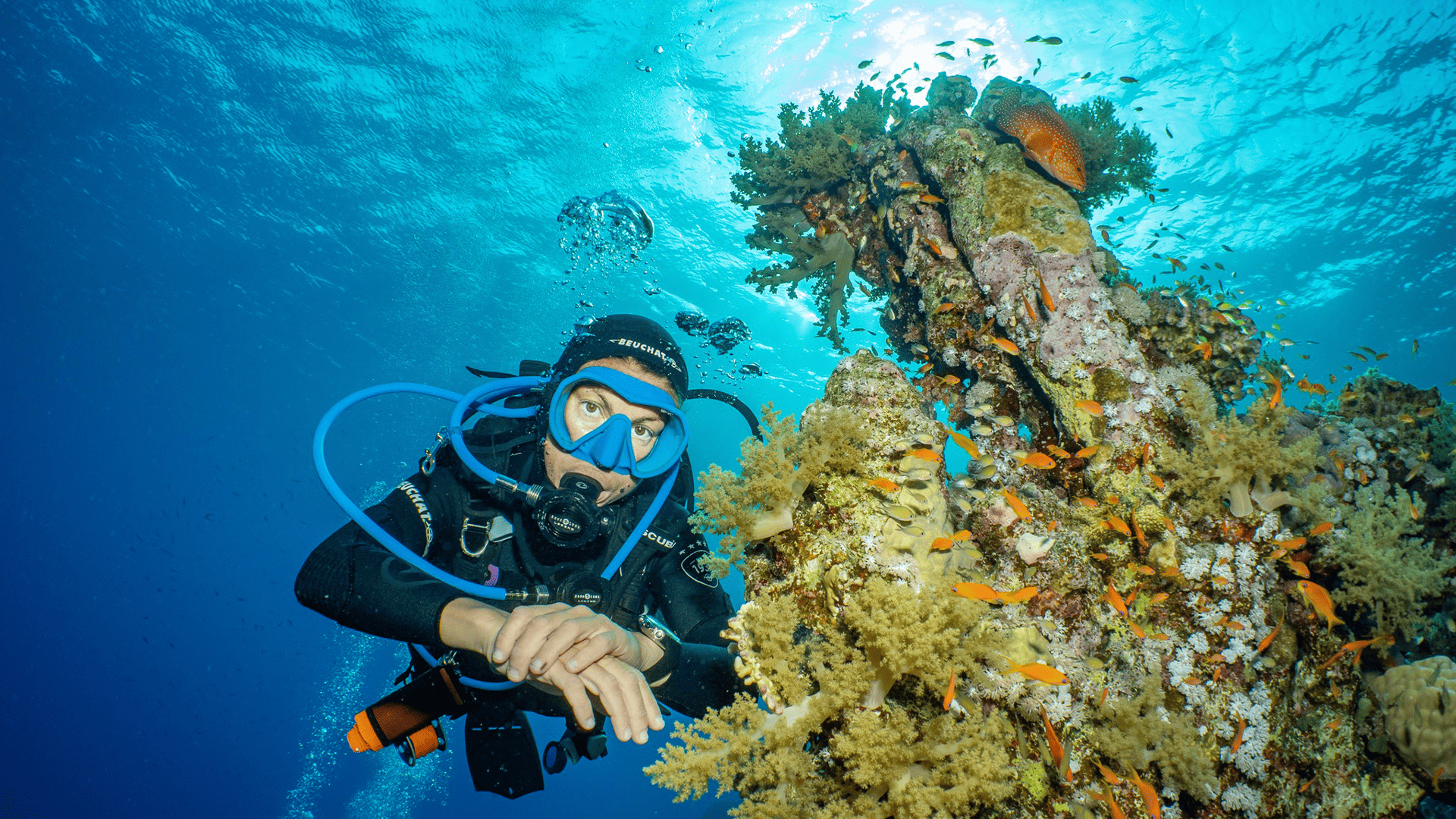
Ask a diver to name Egypt’s most famous reef and there’s a good chance they’ll say Ras Mohammed. It sits at the very tip of the Sinai Peninsula, where the Gulf of Suez and the Gulf of Aqaba meet, and it has the walls, the current and the fish schools to back up the reputation. For anyone planning Egypt liveaboard diving, it usually lands on the shortlist.
Here’s what makes the park special, which dive sites to know by name, what you might see and when, and how a DUNE liveaboard fits Ras Mohammed into a wider route with wrecks like the SS Thistlegorm.
Key Takeaways: Why Is Ras Mohammed Worth Diving by Liveaboard?
- Ras Mohammed became Egypt’s first national park in 1983, and its walls drop hundreds of metres into the blue.
- Shark Reef and Yolanda Reef are the headline sites, with strong currents, big schools of fish and scattered porcelain cargo from the Yolanda.
- Big fish are most abundant from June to August, while winter mornings can occasionally bring a hammerhead at Ras Za’atar.
- Advanced Open Water is a sensible level for the deeper walls, and a surface marker buoy is a must on drifts.
- Our North Ras Muhammad trip on DUNE Titan pairs the park with Abu Nuhas and the Thistlegorm over eight days.
Egypt’s Crown Jewel of Marine Conservation: Why Ras Mohammed Stands Out
first national park. It started at 97 square kilometres and grew to 480 in 1988. That protection shows underwater. You get sheer drop-offs, big schools and healthy coral, helped by strong currents that carry plankton along the reef, with more than 200 coral species and over 1,000 fish species.
Day boats from Sharm el-Sheikh typically leave the marina around 8 to 9am, so popular sites can fill up by mid-morning. On an Egypt liveaboard diving trip you’re already on the water, which gives you a better chance of getting in before the crowd, depending on weather and where we’re anchored. On our North Ras Muhammad trip aboard DUNE Titan, the park gets a full day, with two drop-off dives and a third on a coral garden or wreck.
Top Ras Mohammed Dive Sites: Shark Reef, Yolanda, Anemone City and More
Shark Reef and Yolanda Reef are the names you’ll hear first. Shark Reef is a submerged plateau that starts around 2 metres and drops past 70 metres on its eastern wall, with barracuda, Napoleon wrasse, eagle rays and the odd oceanic whitetip out in the blue. Yolanda Reef is named after a Cypriot cargo ship that ran aground in 1980. Its porcelain cargo, mostly toilets and bathroom fittings, lies scattered on the slope at 25 to 40 metres, and the ship itself later slid into much deeper water. Anemone City is the gentler option, a shallow plateau at roughly 8 to 18 metres covered in anemones and clownfish.
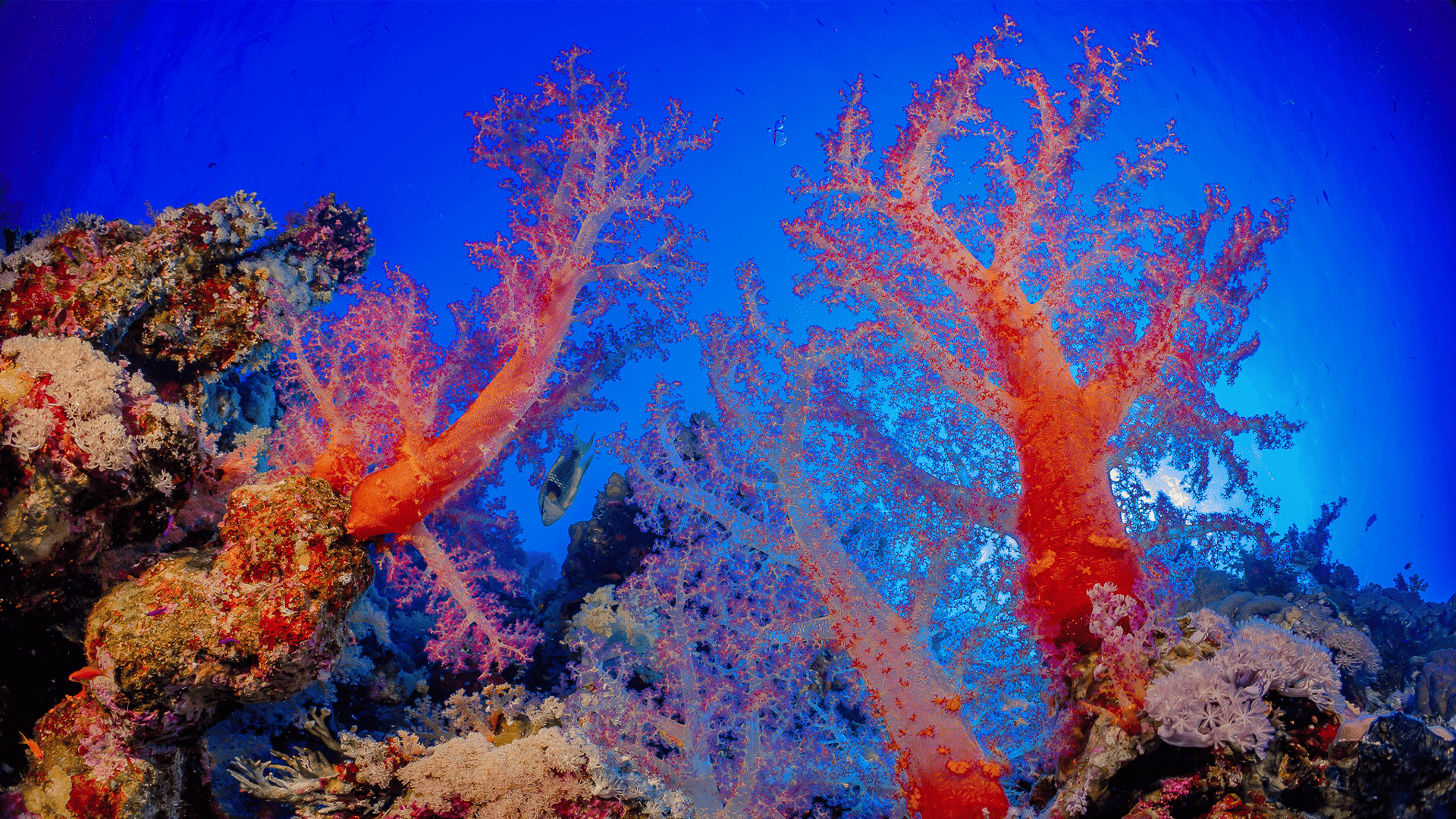
Jackfish Alley is a channel between two reef systems, with moderate to strong current and big schools of bigeye trevally. Ras Za’atar is quieter. You’ll find hard coral near 5 metres and soft coral and sponges on the wall below, and it’s where hammerheads are occasionally spotted on early-morning dives in winter. Our guides pick the day’s sites based on weather and how many boats are around.
What You’ll See at Ras Mohammed, and How to Dive It Well
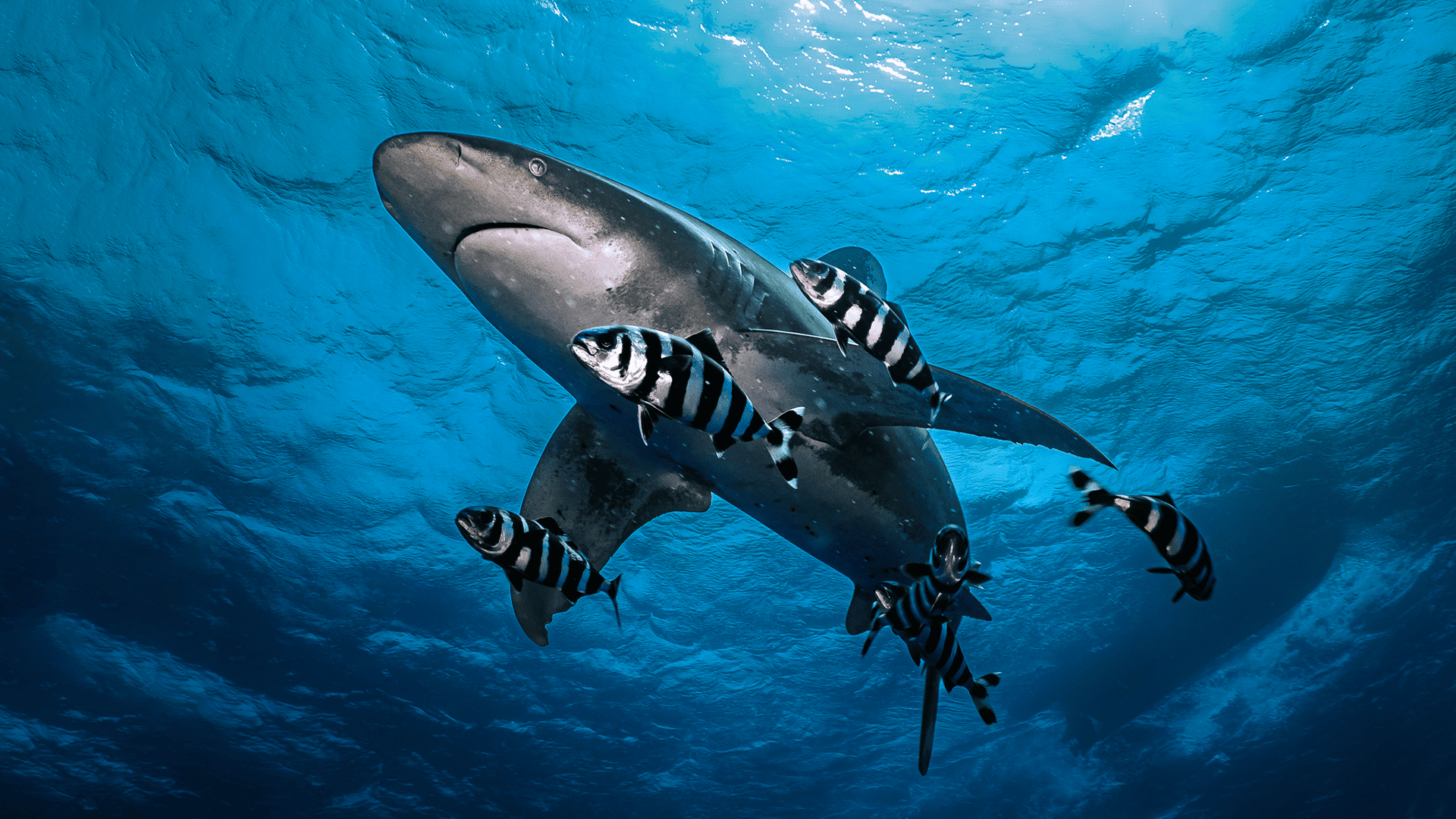
Grey reef sharks and whitetip reef sharks are the regulars, with barracuda, jackfish and tuna schooling along the walls. Big fish are most abundant from June to August, though the water is a warm 26 to 30°C and surface intervals get hot. October to May is cooler at 22 to 24°C and usually calmer, with visibility typically 20 to 35 metres. Sightings are never guaranteed, hammerheads especially.
Advanced Open Water is a sensible level for the deeper walls and drift conditions. Our North Ras Muhammad trip asks for Open Water with at least 20 logged dives. Carry a surface marker buoy for drifts, and some divers use a reef hook to hold position in current, but only where the guide allows it and only on bare rock. Keep to look-but-don’t-touch rules: take nothing, keep fins off the coral, never chase or feed sharks.
Experiencing Ras Mohammed with DUNE Liveaboard
Ras Mohammed rarely stands alone. Our North Ras Muhammad trip on DUNE Titan runs 8 days and 7 nights with about 16 dives, leaving from Hurghada or Safaga. Day 3 is Abu Nuhas, with two wreck dives in the morning and a third after lunch, and Abu Nuhas is also where you’ll find the Giannis D. Day 5 brings two dives on the Thistlegorm, and Day 6 is the park itself. For longer, our 15-day Best of Egypt routes on DUNE Longara and DUNE Silky include Ras Mohamed, the Thistlegorm and Abu Nuhas among 36 or more dives. If you’re still choosing a route, our guide to north vs south Red Sea liveaboard diving helps.
Three boats cover these routes. DUNE Longara is our flagship for up to 30 guests, with en-suite cabins, a Jacuzzi and free Nitrox for certified divers, and its food is covered in Red Sea Liveaboard Diving Gets a Culinary Upgrade Aboard DUNE Longara. DUNE Titan is a 39-metre boat with 15 cabins and a shaded upper deck, and among the fastest in the Red Sea. DUNE Silky is a 44-metre steel-hull boat built in 2020, with space for 26 guests.
Ras Mohammed Dive Sites at a Glance
How the main sites differ:
| Dive Site | Terrain | Depth and Current | Typical Sightings |
| Shark Reef | Plateau with a steep eastern wall | Starts near 2 m, drops past 70 m, strong current | Barracuda, Napoleon wrasse, eagle rays |
| Yolanda Reef | Reef slope with scattered cargo | Cargo at 25 to 40 m | Porcelain toilets, reef fish |
| Anemone City | Shallow plateau | About 8 to 18 m, gentle | Anemones, clownfish |
| Jackfish Alley | Channel between two reefs | Moderate to strong current | Bigeye trevally |
| Ras Za’atar | Wall with coral and sponges | Hard coral near 5 m | Occasional hammerheads in winter |
What Guests Say About Diving the North Route
Guides make or break a Ras Mohammed trip. Here’s what recent guests said about DUNE Titan.
“Careful guide and nice reef in north route.”
Xi Z rated the north route highly, and it’s the same route that takes in Ras Mohammed. Careful guiding matters most on current-swept walls.
“Our guide made the dive safe and enjoyable.”
JINSEOK N keeps it short. Safe and enjoyable is exactly what you want from a drift dive.
“Dive guides briefings (with history of wrecks).”
Gennaro S liked the history woven into the briefings, which makes wrecks like the Thistlegorm mean more once you’re in the water.
Your Ras Mohammed Questions, Answered
What is the best time to dive Ras Mohammed? October to May is cooler (22 to 24°C) and usually calmer. June to August is warmer (26 to 30°C) and has the biggest fish activity.
Do I need Advanced Open Water to dive Ras Mohammed? Open Water is the minimum, but Advanced is recommended for walls deeper than 20 metres. Our North Ras Muhammad trip asks for Open Water with at least 20 logged dives.
Is the Yolanda wreck still at Ras Mohammed? The ship slid off the reef into much deeper water, far beyond recreational depths. What divers see today is its porcelain cargo, scattered on the reef slope at 25 to 40 metres.
Ready to Dive Ras Mohammed?
Walls, drifts, big schools and a bit of history make Ras Mohammed one of the best days underwater in Egypt liveaboard diving, especially on a route that adds wrecks. Browse our Red Sea liveaboard diving trips to see which route and boat suit you, or the full schedule for open dates.
Got questions about requirements, dates or which cabin to pick? Drop us a line at booking@dune-world.com or message us on WhatsApp, and our team will happily talk you through it.