Red Sea liveaboard diving comes with two big promises. One is fast, flying drift dives that get your heart rate up. The other is wrecks that feel like stepping into a history book, from a wall at Ras Mohammed to the cargo holds of the SS Thistlegorm. Our Red Sea liveaboard diving trips are built around exactly that.
None of it happens on autopilot, though. Currents shift, depth adds up, wreck interiors close in around you, and conditions can change between one dive and the next. This guide covers the skills, gear and safety habits that help you feel ready before you step on deck, plus how we set things up to look after you once you’re with us.
What Do You Need to Know Before Diving the Red Sea?
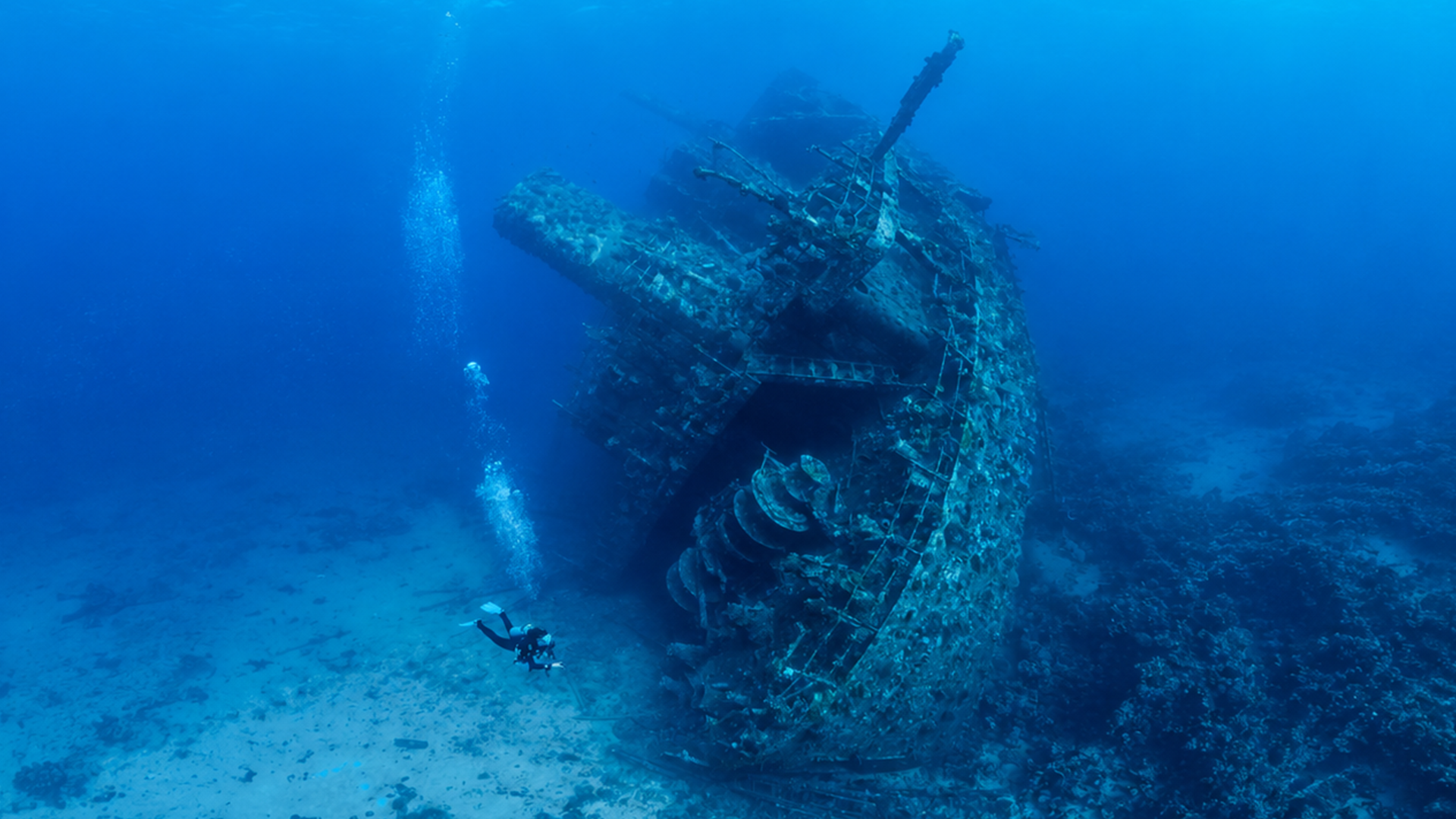
- Drift dives reward divers with solid trim, neutral buoyancy and a streamlined setup, plus a negative entry when the current is already running.
- A surface marker buoy and a finger spool are essential, and so is keeping visual contact with the zodiac when you surface.
- On wrecks like the Thistlegorm and Giannis D, never go beyond natural light without proper training and a guideline.
- Nitrox gives you more bottom time on mid-depth wrecks, and it’s free for certified divers on every DUNE boat.
- Our guides brief each site in detail, and zodiacs handle pick-ups so you can focus on the dive.
Getting Ready for Red Sea Drift Dives
On a drift dive, you’re dropped in where the current is already moving, so you’ll often do a negative entry: air out of the BCD and straight down, no waiting around at the surface. Once you’re under, trim and buoyancy matter more than anything. Sweeping walls like Ras Mohammed and Elphinstone reward the diver who can hover without thinking about it. Streamline your setup too. Clip off loose hoses and gauges, because anything that dangles catches the current.
Two bits of kit are non-negotiable. Carry a bright surface marker buoy and a finger spool for open-water ascents, and keep visual contact with the zodiac once you’re up. Some divers also like a reef hook for holding position in strong current, though only where the guide says it’s okay and only on bare rock, never on live coral. Air matters as well. Swimming against a sudden surge burns gas faster than you’d expect, so check your pressure more often than usual and call the dive early if you need to. Still choosing a route? See our guide to north vs south Red Sea liveaboard diving.
Wreck Diving in the Red Sea: Thistlegorm, Giannis D and Beyond
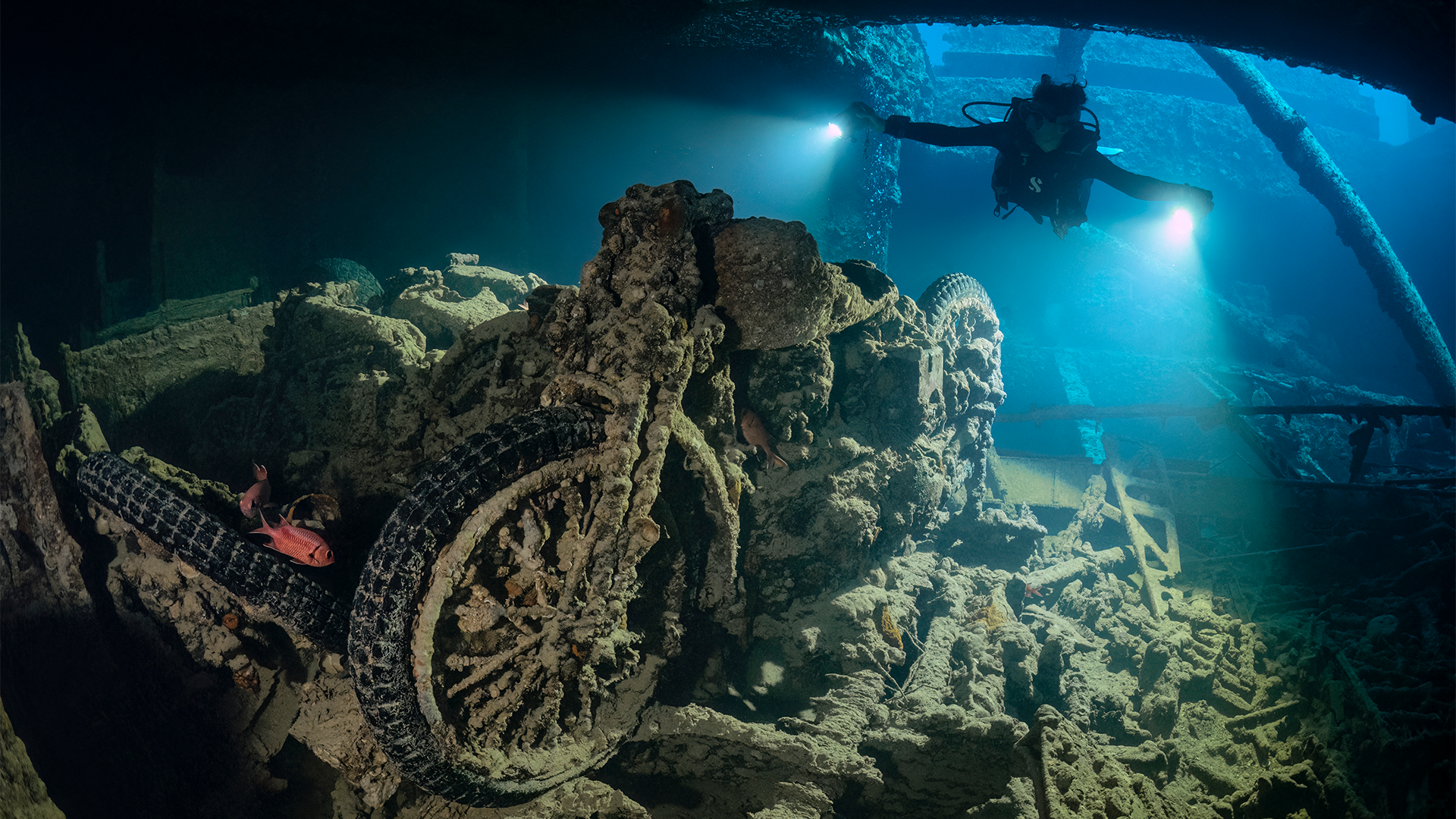
The golden rule is a simple one. Don’t go past the point where natural light reaches without specialised training and a proper wreck line. The Thistlegorm and Giannis D are full of overhead environments, sharp metal and tight passages, and a swim-through that looks easy on the way in can feel very different when silt drops on you from above. Good finning keeps things clean. Frog kicks and modified flutter kicks leave the silt on the floor instead of in your mask, which matters a lot in cargo holds and engine rooms, and staying neutral keeps you off the delicate structures inside.
Carry a primary light and a backup, because holds and shadowed corners get dark fast. Add a line cutter or shears in case of fishing line, and set your dive computer conservatively, with multi-level profiles in mind, since a wreck rarely stays at one depth. On our Best of Egypt route aboard DUNE Silky, the Thistlegorm gets at least two dives, so you have time to see it properly. It’s a big reason Egypt liveaboard diving appeals to wreck fans.
Gas Management and Why Nitrox Makes a Difference
Gas management starts with the rule of thirds. One third for the way in, one third for the way out, one third kept in reserve, which is why you turn the dive earlier than you’d like when you’re exploring the inside of a wreck. On a drift you can’t always turn back against the current, but the principle holds.
Then there’s Nitrox. Many Red Sea wrecks sit at mid-depth, roughly 16 to 30 metres, and richer air gives you more bottom time there. Over a multi-dive day, many divers also feel less drained afterwards. It does need a Nitrox certification, and you’ll analyse your own mix and set your computer to match. Good news: Nitrox is free for certified divers aboard every boat in our fleet.
Staying Safe and Comfortable with DUNE Liveaboard
Before each dive, our guides run a full briefing, covering the current, the entry and the exit plan. They also choose sites based on the weather and how many other boats are around. Zodiacs handle pick-ups and drop-offs at drift and wreck sites, so you’re not left bobbing at the surface waiting for a lift. If you’d like to meet the people behind the briefings, Life Onboard: The Crew Behind Your Red Sea Liveaboard is worth a read.
Then there’s the boat itself. DUNE Longara is our flagship, with room for up to 30 guests, en-suite cabins and a Jacuzzi for after the dive. DUNE Titan is a 39-metre expedition boat with 15 cabins and a shaded upper deck, and it’s one of the fastest boats in the Red Sea. DUNE Silky is a 44-metre steel-hull boat built in 2020, with space for 26 guests and a relaxed feel after a hard day’s diving.
Red Sea Dive Prep at a Glance
Here’s a quick reference for what to focus on, depending on the type of dive.
| Dive Type | Key Skill | Must-Have Gear | Watch Out For |
| Drift dive | Negative entry, steady trim | Surface marker buoy and finger spool | Surge, fast air consumption |
| Wall dive | Neutral buoyancy at depth | Computer set conservatively | Drifting too deep along the drop |
| Wreck exterior | Awareness of sharp metal | Primary light, line cutter | Fishing line, other divers |
| Wreck interior | Frog kick, no contact | Backup light, guideline | Silt-outs, overhead environment |
What Guests Say About Diving with DUNE
Preparation is one thing, the people looking after you are another. Here’s what recent guests said about DUNE Silky.
“Wonderful dive guide… Good wreck diving.”
Michael L mentions the guide and the wrecks in the same breath, which is a good sign. A strong guide makes wreck dives feel calmer, especially for people new to overheads.
“Quality of dive briefings.”
Marc F wrote this in French, and also praised sites chosen with accuracy by team management. Briefings matter most on drifts, where the plan is the plan.
“Because of the zodiacs, the food, large beds.”
Roman C wrote in Spanish and singled out the zodiacs, which tells you pick-ups are noticed by the people actually using them.
Your Red Sea Diving Questions, Answered
Do I need to be an advanced diver for Red Sea liveaboard trips?
On our Best of Egypt route, we ask for Advanced Open Water with at least 50 dives, or Level 2. Drift dives, depth and wreck sites reward experience. Not sure? Get in touch and we’ll talk it through.
Is Nitrox really worth it on a Red Sea liveaboard?
For most divers doing several dives a day, yes. It gives you more bottom time on mid-depth wrecks, and it’s free for certified divers aboard all three DUNE boats. You’ll need the certification first.
Can I go inside the Thistlegorm?
Only with the right training and a guideline. Our guides brief each wreck dive and tell you what’s realistic for your level.
Ready for Your Red Sea Dive Adventure?
Drift dives and wrecks are the heart of the Red Sea, and the divers who enjoy them most are usually the ones who prepared a little. Browse our Red Sea liveaboard diving trips to see which route and boat suit you or the full schedule.
Got questions about requirements, dates or which cabin to pick? Just drop us a line at booking@dune-world.com or message us on WhatsApp, and our team will happily talk you through it.